
Losing weight with the right weight loss program does not mean giving up on the flavours you grew up with. A well-structured 7 day Indian Meal plan for weight loss can help you shed excess kilos while still enjoying dal, roti, sabzi and the occasional treat. This plan has been put together drawing on the clinical experience of Avni Kaul, a Delhi-based dietician who has guided hundreds of clients through sustainable weight loss. The key lies in portion control, balanced macronutrients and consistency, not deprivation.
Quick Summary
This 7 day Indian Meal plan for weight loss uses everyday foods like dal, roti, sabzi, curd and seasonal fruit, structured around a daily calorie range of 1,400 to 1,500 kcal. Each day includes three main meals and two light snacks, with portion control and minimal oil rather than food elimination. Paired with regular walking, adequate water intake and good sleep, the plan is designed to be sustainable rather than a short-term crash Meal .
This guide lays out a practical, easy-to-follow seven-day meal plan with approximate calories
TL;DR
- Calorie range: 1,400 to 1,500 kcal per day
- 3 main meals + 2 light snacks, spaced 3 to 4 hours apart
- Built around dal, roti, vegetables, curd, sprouts, paneer and lean protein
- Avoid fried snacks, sugary drinks and packaged Meal foods
- Pair with 30 to 40 minutes of daily walking and 2.5 to 3 litres of water
Why Indian Meals Work Well for Weight Loss
Indian cuisine is naturally rich in fibre, legumes, spices and seasonal vegetables, all of which support healthy metabolism when portioned correctly. The problem is rarely the food itself. It is usually excess oil, refined carbohydrates, oversized portions and irregular meal timing that lead to weight gain.
A structured plan fixes this by:
- Balancing protein, fibre and complex carbohydrates at every meal
- Controlling portion sizes without eliminating entire food groups
- Spacing meals to avoid energy crashes and overeating
- Using traditional cooking methods like steaming, roasting and light sautéing instead of deep frying
General Rules to Follow Through the Week
Before diving into the day-by-day plan, keep these principles in mind:
- Drink at least 2.5 to 3 litres of water daily
- Avoid sugary beverages, packaged juices and aerated drinks
- Use minimal oil (1 to 2 teaspoons per meal) and prefer mustard, groundnut or olive oil
- Include one source of protein in every meal
- Keep dinner light and finish eating at least two hours before bedtime
- Walk for 30 to 40 minutes daily alongside the Meal
- Aim for 7 to 8 hours of sleep, as poor sleep is linked to increased hunger and cravings
Most moderately active adults see steady weight loss of 1,400 to 1,800 calories a day, depending on age, gender and activity level. The plan below is built around roughly 1,400 to 1,500 calories a day, so adjust portions up or down slightly based on your own requirements.
If you’re unsure where you currently stand, you can use our BMI calculator to get a clearer starting point before following this plan.
7 Days Indian Meal Plan for Weight Loss
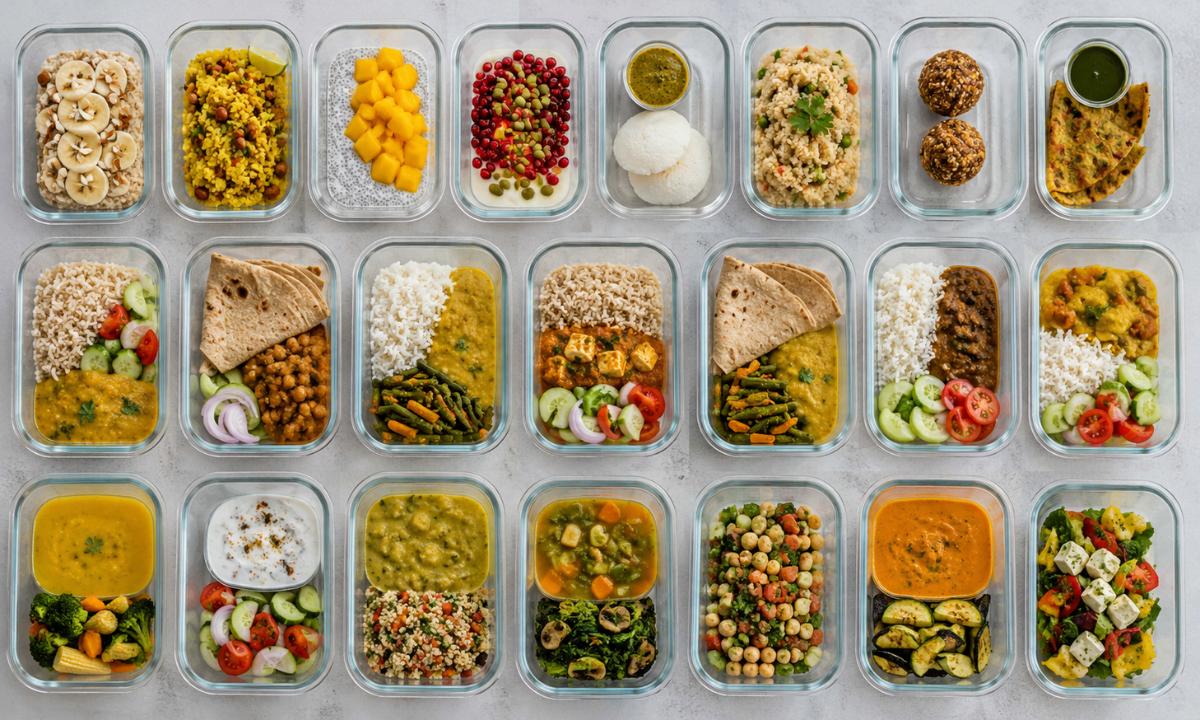
Day 1 (approx. 1,420 kcal)
| Meal | Food | Calories |
|---|---|---|
| Breakfast | Vegetable moong dal chilla with mint chutney | 280 |
| Mid-morning | Bowl of papaya or watermelon | 90 |
| Lunch | 2 multigrain rotis, palak paneer, cucumber salad | 430 |
| Evening | Roasted makhana (1 small bowl) | 120 |
| Dinner | Vegetable soup with grilled paneer tikka | 350 |
Day 2 (approx. 1,450 kcal)
| Meal | Food | Calories |
|---|---|---|
| Breakfast | Vegetable poha with peanuts | 300 |
| Mid-morning | Buttermilk (chaas) | 60 |
| Lunch | Brown rice, rajma, mixed vegetable salad | 450 |
| Evening | Sprouts chaat | 140 |
| Dinner | Tandoori chicken or tofu with sautéed vegetables | 380 |
Day 3 (approx. 1,400 kcal)
| Meal | Food | Calories |
|---|---|---|
| Breakfast | Oats idli with sambhar | 270 |
| Mid-morning | Soaked almonds and walnuts (6 to 7 pieces) | 100 |
| Lunch | 2 rotis, bhindi sabzi, curd | 420 |
| Evening | Green tea with roasted chana | 130 |
| Dinner | Moong dal khichdi with vegetables | 380 |
Day 4 (approx. 1,470 kcal)
| Meal | Food | Calories |
|---|---|---|
| Breakfast | Besan chilla with tomato chutney | 290 |
| Mid-morning | Apple or guava | 80 |
| Lunch | Quinoa pulao with raita and salad | 440 |
| Evening | Vegetable soup | 100 |
| Dinner | Grilled fish or paneer with stir-fried vegetables | 400 |
Day 5 (approx. 1,430 kcal)
| Meal | Food | Calories |
|---|---|---|
| Breakfast | Vegetable upma with coconut chutney | 300 |
| Mid-morning | Coconut water | 45 |
| Lunch | 2 rotis, lauki sabzi, dal, salad | 420 |
| Evening | Roasted peanuts and chana | 150 |
| Dinner | Egg bhurji or paneer bhurji with salad | 350 |
Day 6 (approx. 1,480 kcal)
| Meal | Food | Calories |
|---|---|---|
| Breakfast | Stuffed methi paratha (light oil) with curd | 320 |
| Mid-morning | Bowl of seasonal fruit | 90 |
| Lunch | Brown rice, chole, cucumber-onion salad | 440 |
| Evening | Herbal tea with a handful of nuts | 110 |
| Dinner | Clear vegetable soup with grilled chicken or tofu | 370 |
Day 7 (approx. 1,390 kcal)
| Meal | Food | Calories |
|---|---|---|
| Breakfast | Vegetable daliya | 270 |
| Mid-morning | Buttermilk | 60 |
| Lunch | 2 rotis, mixed vegetable curry, dal, salad | 420 |
| Evening | Roasted makhana | 120 |
| Dinner | Light khichdi with vegetables | 340 |
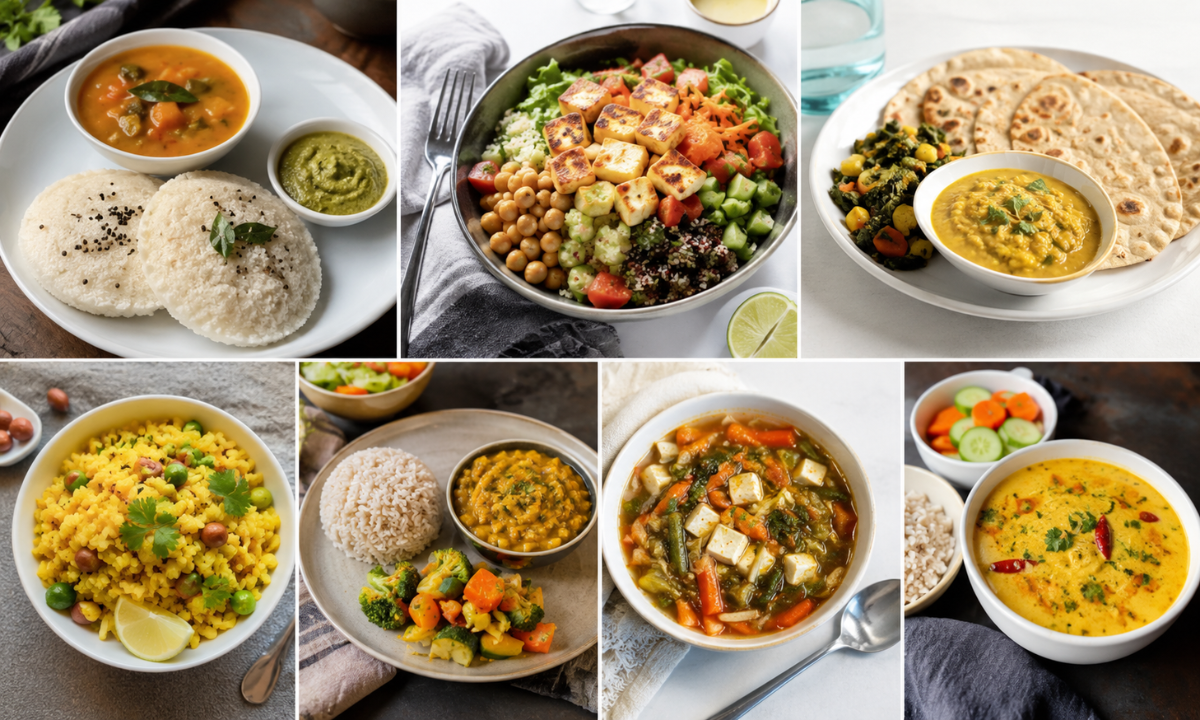
Weekly Indian Meal Plan for Weight Loss
| Day | Breakfast | Lunch | Dinner | Approx. Daily Calories |
|---|---|---|---|---|
| Day 1 | Moong dal chilla | Roti, palak paneer, salad | Soup with grilled paneer tikka | 1,420 |
| Day 2 | Vegetable poha | Brown rice, rajma, salad | Tandoori chicken/tofu, vegetables | 1,450 |
| Day 3 | Oats idli, sambhar | Roti, bhindi sabzi, curd | Moong dal khichdi | 1,400 |
| Day 4 | Besan chilla | Quinoa pulao, raita, salad | Grilled fish/paneer, vegetables | 1,470 |
| Day 5 | Vegetable upma | Roti, lauki sabzi, dal | Egg/paneer bhurji, salad | 1,430 |
| Day 6 | Methi paratha, curd | Brown rice, chole, salad | Soup with grilled chicken/tofu | 1,480 |
| Day 7 | Vegetable daliya | Roti, mixed vegetable curry, dal | Light khichdi with vegetables | 1,390 |
This structure keeps daily calorie intake between 1,400 and 1,500 while ensuring your body receives adequate protein, fibre and micronutrients throughout the week. According to guidance from the National Health Service, sustainable weight loss is best achieved through gradual, consistent dietary changes rather than extreme restriction, which aligns closely with the approach outlined above.
The Role of Indian Spices in Weight Loss
Beyond flavour, several everyday Indian spices offer genuine metabolic benefits:
- Cumin (jeera): Aids digestion and may support fat metabolism
- Turmeric (haldi): Contains curcumin, which has anti-inflammatory properties
- Fenugreek (methi): Helps regulate blood sugar and reduces appetite
- Black pepper: Contains piperine, which may enhance nutrient absorption
- Cinnamon (dalchini): May help improve insulin sensitivity
Adding these to your daily cooking, rather than relying on supplements, is a simple way to support the plan without any extra effort.
Smart Snacking Between Meals
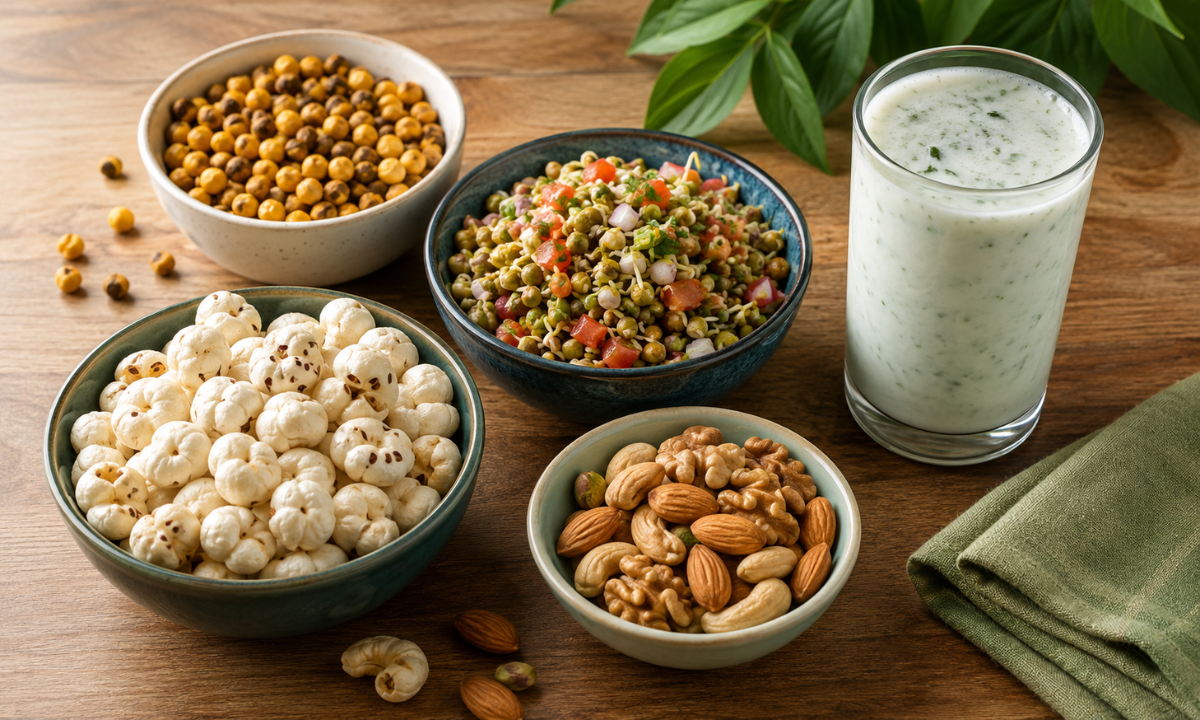
Snacking is not the enemy of weight loss; poor snack choices are. Instead of biscuits, namkeen or fried snacks, try:
- Roasted chana or makhana
- A small bowl of sprouts with lemon and chaat masala
- Buttermilk or a small glass of coconut water
- A handful of nuts (5 to 6 almonds or walnuts)
- Cucumber or carrot sticks with hummus
Keeping healthy snacks within easy reach reduces the temptation to reach for packaged, calorie-dense alternatives when hunger strikes between meals.
Common Mistakes to Avoid
Even with a solid meal plan, certain habits can slow down progress:
- Skipping breakfast: This often leads to overeating later in the day
- Overcooking vegetables: This reduces fibre and nutrient content
- Relying on packaged “Meal ” snacks: Many are high in hidden sugars
- Ignoring portion sizes: Even healthy foods can cause weight gain in excess
- Not tracking progress: Weekly check-ins help you stay accountable
- Cutting calories too drastically: This can slow metabolism and lead to muscle loss rather than fat loss
- Eating too fast: This makes it easier to overeat before your body registers fullness
Pairing the Meal with Physical Activity

Meal alone can produce results, but combining it with regular movement speeds up progress and improves overall health. A simple weekly structure could include:
- 30 to 40 minutes of brisk walking, five to six days a week
- Two to three sessions of light strength training or bodyweight exercises
- One or two sessions of yoga or stretching for flexibility and stress management
Even without a gym, consistent daily movement such as walking, taking the stairs and stretching makes a measurable difference over seven days and beyond.
Why Personalised Guidance Matters
While a general 7 day plan is a great starting point, everybody’s body responds differently based on metabolism, lifestyle, medical history and food preferences. A dietician in Delhi, such as Avni Kaul, a Gold Medallist from the University of Delhi and Olympic Nutrition Advisor at the Buenos Aires 2018 Youth Olympic Games, can help tailor these fundamentals to your specific needs through Nutri Activania’s weight management program.
Conclusion
A 7 day Indian Meal plan for weight loss works best when it is realistic, nutrient-dense and easy to sustain. The calorie-mapped plan above gives you a clear, scannable structure to follow, but individual results will always vary based on your body’s specific needs. If progress stalls or you need a more tailored approach, consulting a dietician for weight loss in Delhi is a sensible next step.
Frequently Asked Questions
Can I lose weight in 7 days on an Indian Meal ?
You can see initial results such as reduced bloating and improved digestion within a week, but meaningful, sustainable fat loss typically takes several weeks of consistent effort.
Is roti or rice better for weight loss?
Both can be included in moderation. What matters more is portion size, the accompanying sabzi or dal, and overall calorie balance through the day.
How many calories should I eat daily to lose weight?
This varies by individual, but most moderately active adults see steady results on 1,400 to 1,800 calories a day, depending on age, gender and activity level.
How many meals should I eat in a day for weight loss?
Most people benefit from three main meals and two light snacks, spaced roughly three to four hours apart, to avoid overeating and maintain steady energy levels.
Do I need to completely avoid ghee and oil?
No. Small, controlled amounts of ghee or oil are fine and even beneficial. The goal is moderation, not elimination.
When should I consult a dietician instead of following a general plan?
If you have underlying health conditions, have tried multiple Meal without success, or want a plan tailored to your specific lifestyle and goals, consulting a professional is strongly recommended.